
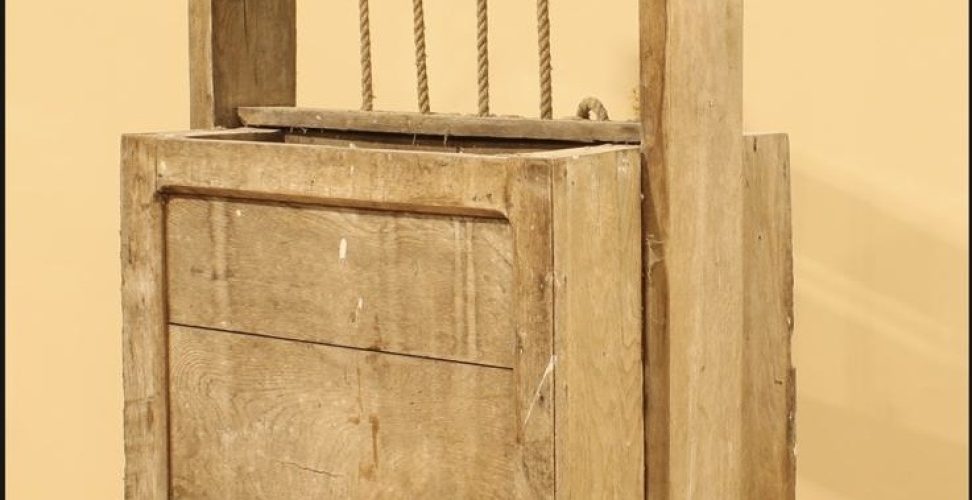
Imagine it standing in the corner of a Welsh farmhouse kitchen sometime in the mid-1800s.
The day would have begun early. Before the fire had properly warmed the kitchen, milk from the morning milking would have been brought inside and the work of making cheese would begin. For a farming family, cheese was an important way of preserving the value of surplus milk. Transforming something highly perishable into food that could be stored, eaten through the winter or sold locally.
Our cheese press would have had one very particular job.
Once the curds had been separated from the whey and packed into a mould, the wooden follower would have been placed on top. The great screw would then have been tightened, gradually forcing the remaining whey from the curds and compressing them into a firm cheese. The large wooden wheel is beautifully expressive of this process: turn by turn, pressure would build.
Perhaps it was operated by the farmer himself, or by a wife or daughter who knew exactly how much pressure the cheese required. Too little and the cheese would remain loose; too much, too quickly, and the result could be spoiled. Making cheese was a skilled domestic craft, learned through experience rather than written instruction.
The finished cheeses would be removed from their moulds and placed on wooden shelves or boards to mature. They would be turned and cared for as they developed their character. In a farming community, nothing was wasted. The whey might be fed to pigs, while the cheese itself could provide valuable food for the household or become something to sell or exchange.
Our press may have witnessed hundreds of such days.
It would have stood through summers when the farmhouse doors were thrown open to the light, and winters when the kitchen was the warmest room in the house. It would have absorbed the smells of woodsmoke, milk, butter and freshly baked bread. Generations of hands would have touched its wheel and worn its timber smooth.
And eventually, as farming methods changed and cheese production became increasingly commercialised, its working life would have come to an end.
That, perhaps, is the most interesting part of its story. This wonderfully robust piece of Welsh rural craftsmanship survived because it remained useful, valued or simply too beautifully made to discard.
Today, the marks, scratches and softened oak tell us something that a pristine reproduction never could: this was a working object. It had a life.
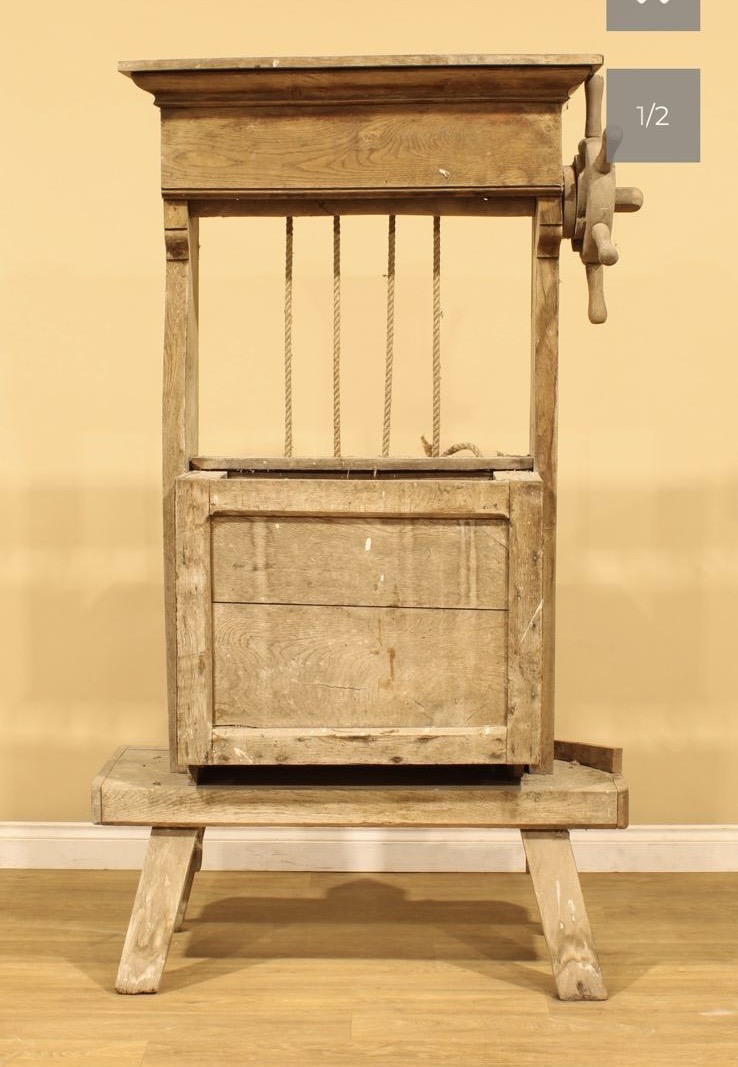
We cannot know the name of the farmhouse where it stood, or the people who turned its great wooden wheel. But when we look at it, we can imagine them. This extraordinary cheese press still carries a little of the life of a nineteenth-century Welsh kitchen with it.
An imagined reconstruction based on the traditional use of Welsh farmhouse cheese presses; the specific history of this particular press is not known.
More stories from our growing collection of period furniture and antiques at Y Segontiwm. Contact me at hello@lifefullcolour.com to discuss this and any other piece of fine art or collectables you are interested in. Everything is available for sale.